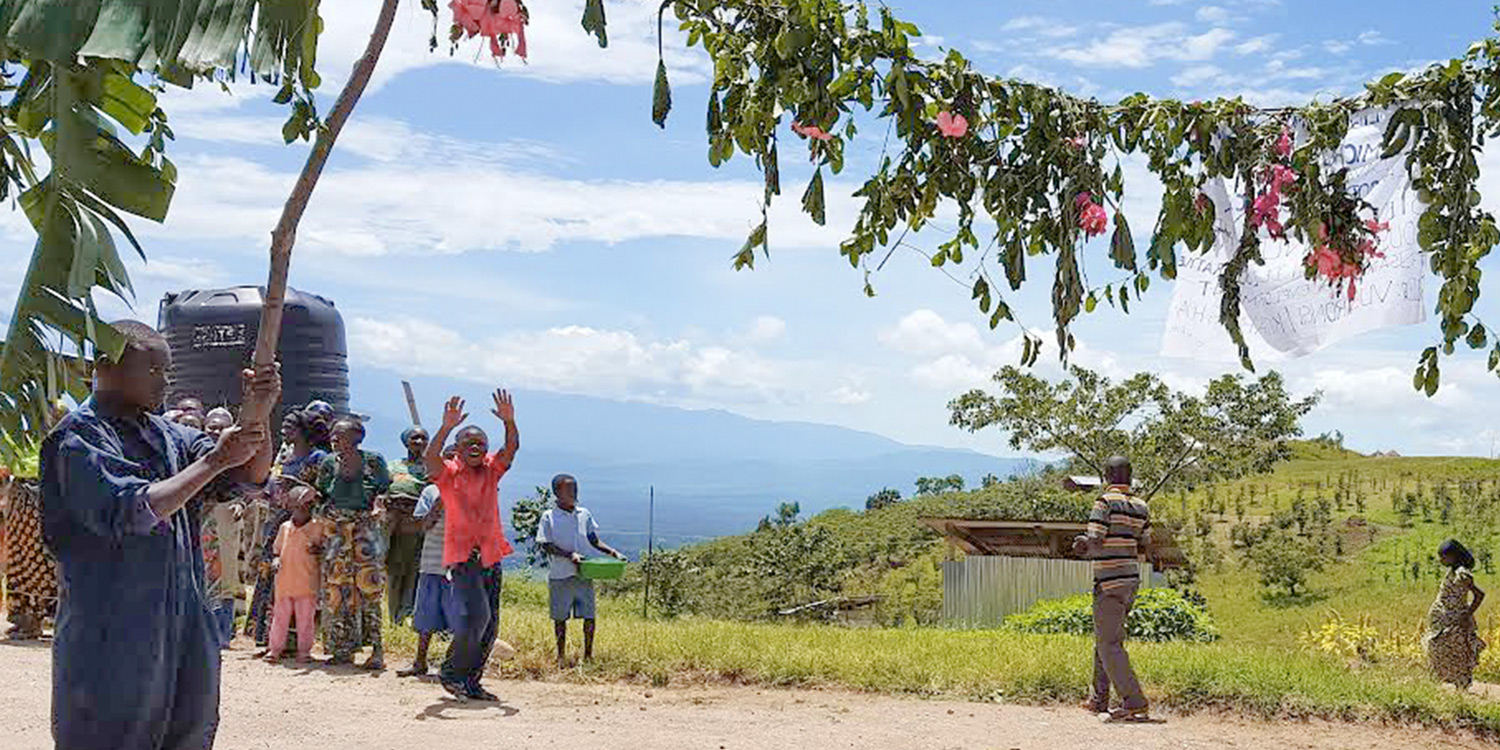
In the Muyira Sector of Rwanda's Southern Province, there is a washing station that did not exist because of a wealthy investor or a development organization or a foreign NGO. It exists because a group of farmers — each growing coffee on plots too small to matter to anyone — decided to trust each other.
They pooled their money. Between 2,400 and 6,000 Rwandan Francs per farmer. At the exchange rate when this happened, that was less than $10 each. For most of these families, it wasn't a trivial amount. It was a genuine sacrifice, made in faith that the sum of small commitments could become something none of them could build alone.
"What struck me when I first heard the story wasn't the ingenuity of it — though it was ingenious. It was the courage. To pool resources with your neighbors, you have to believe in them. In a part of the world where trust was shattered barely a generation before, that act carries weight."
Why Individual Volumes Weren't Enough
To understand what the Inzere farmers did, you need to understand the mathematics of smallholder coffee farming. Most of these families grow coffee on plots measured in decimal hectares — a third of an acre, half an acre. The cherry harvest from a plot that size might weigh a few hundred kilograms.
No specialty buyer travels to Rwanda's Southern Province for a few hundred kilograms of cherry. The logistics don't make sense. And without access to a washing station — where cherry is pulped, fermented, washed, and dried — smallholder coffee cannot become specialty coffee. It becomes commodity cherry, sold locally at commodity prices.
The washing station is the gateway. And washing stations require capital to build and operate.
What LetSequoia Brought to the Partnership
By the time I connected with the Inzere community, the farmers had already demonstrated extraordinary initiative. What they needed was a partner who could take their coffee to market — who understood specialty buyers, who could create the traceability documentation that premium buyers require, and who would stay in the relationship through bad seasons as well as good ones.
That's what LetSequoia offered. Not charity. Partnership. We didn't hand them a washing station. We joined a project they had already started, added our export infrastructure, and committed to a long-term relationship built on shared success.
The arrangement works because it's honest. When the crop is excellent, they earn more. When we can command higher prices from buyers, we share that premium. The economics align.
The Cup That Results
I want to be clear about something: the quality of Rwanda Inzere is not a story you have to accept on faith. It's in the cup.
Inzere lots score consistently above 85 points on the SCA scale — the threshold for specialty classification. The flavor profile features notes of stone fruit, bright citrus-laced acidity, and a clean, sweet finish. Blind-tasted against other East African origins, it holds its own. More than holds its own.
The farmers who pooled their money didn't just create an economic structure. They created the conditions for something genuinely excellent to exist. Every time a buyer in Tokyo or Copenhagen or San Francisco brews a cup of Rwanda Inzere, they are, without knowing it, drinking an act of collective courage.
The Lesson I Carry
I think about the Inzere farmers often when I'm feeling like a problem is too big or a resource gap is too wide. The gap between where they started and where they are today was bridged not by a large injection of capital or a powerful outside organization — but by small commitments, multiplied.
The Sequoia doesn't grow tall because of one heroic root. It grows tall because ten thousand small roots intertwine and hold each other up. The farmers of Inzere understood this before I had a name for it.
Rwanda Inzere is available now for sampling. Contact us to request yours.